SYDNEY CONTEMPORARY 2026
SHUHEI FUKUDA
MAX LAWRENCE WHITE
September 3 - 6th, 2026
SYDNEY CONTEMPORARY 2026 CATALOGUE
SCAF Stock Room Catalogue
For Sydney Contemporary 2026, Five Walls Gallery presents Melbourne-based artist Max Lawrence White alongside Tokyo-based artist Shuhei Fukuda (b. 1997), bringing together two distinct approaches to abstraction shaped by systems, materials and transformation. White introduces chance as a method of disrupting personal preference, while Fukuda allows the natural properties of silver and the passage of time to influence the work. In both practices, the artist establishes a framework within which unexpected relationships can emerge, opening abstraction to processes that extend beyond intention and into perception.
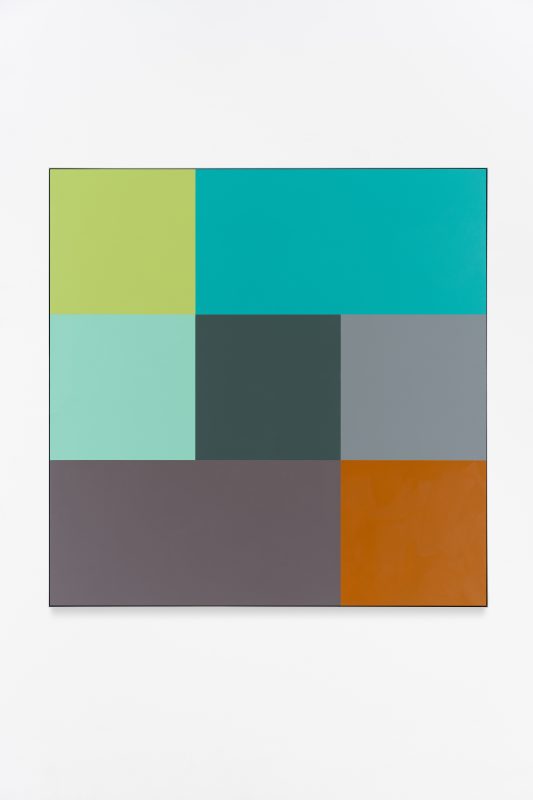
In A Challenge of Biases, White examines the space between personal preference and chance. Drawing from a catalogue of 210 colours gathered in his studio, he uses a random sequence generator to determine combinations of seven colours for each painting. These unexpected relationships are then organised within a precise geometric framework of rectangles and squares. The resulting works hold two seemingly opposing forces in balance: the structure of the grid and the unpredictability of colour. By surrendering a degree of artistic control, White challenges assumptions surrounding colour harmony and opens up new possibilities for how colour might be experienced and understood.
White’s practice is grounded in an ongoing investigation into the potential of colour and its capacity to generate different experiences and meanings. His geometric compositions are not simply exercises in formal order, but spaces in which perception remains active—where colour, proportion and the intervals between forms continually shift in relation to one another. The tension between structure and chance is central to this process, allowing each work to emerge through a negotiation between a predetermined framework and variables beyond the artist’s immediate control. Based in Melbourne, White has exhibited widely across Australia and completed a residency in southern Japan. His work has been featured in publications including VAULT Magazine, Aesthetica, and Art Collector. He holds a Bachelor of Fine Art from RMIT University and an Honours degree from the Victorian College of the Arts.
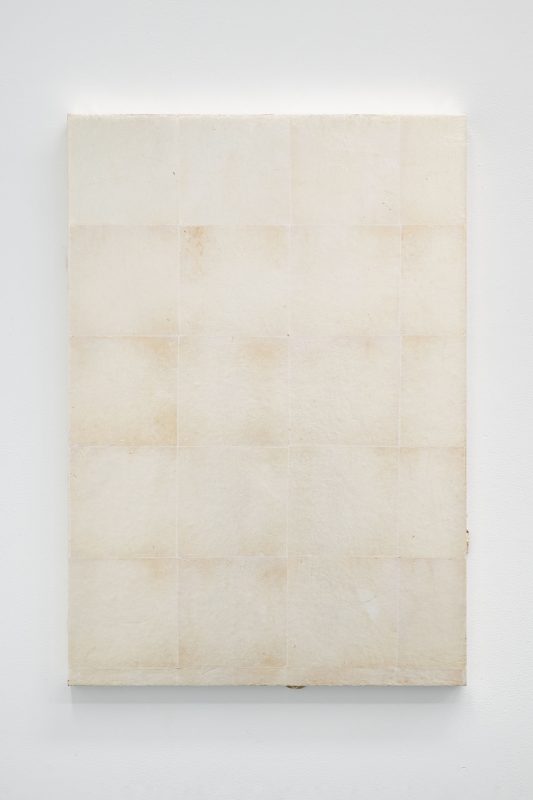
For Fukuda, material itself becomes a site of transformation. Working with washi paper and silver leaf, he draws on traditional Japanese techniques while approaching the surface through a contemporary language of abstraction. Silver is not treated as a static colour or finish, but as a material with its own capacity to change. Through oxidation, its reflective surface gradually alters, allowing time and environmental conditions to become part of the work. The boundary between painting and object becomes increasingly fluid, as the surface records both the artist’s intervention and processes beyond his control.
Fukuda’s practice reflects an awareness of impermanence and material presence, embracing change not as a departure from the artwork but as an essential part of its existence. The shifting qualities of silver—reflective, translucent and at times elusive—create surfaces that resist a single, fixed reading. Rather than remaining fixed at the moment of completion, the works continue to develop through their encounter with time and their surrounding environment. Recently completing his doctoral studies at Tokyo University of the Arts, Fukuda has exhibited internationally, including Quiet Colors at RUE VERTE, Copenhagen (2023), Ashes and Silver Leaf at Hebel_121, Basel (2023), and Depository Archaeology at Kvalitar, Prague (2023).
Together, White and Fukuda present two distinct approaches to an abstraction that remains open to change. White introduces uncertainty at the point of composition, allowing chance to disrupt predetermined relationships between colour and form. Fukuda allows transformation to continue beyond the moment of making, as silver responds to time and its surrounding environment. In both practices, the artwork is shaped by more than the artist’s initial intention. Their works invite us to consider abstraction not as a fixed visual language, but as an evolving encounter between structure, material, time and perception.
image top: Shuhei Fukuda, Quiet Presence 005-011, 2026, Japanese paper, Silver leaf, Cinnabar, 65.5 x 45.5 x 3 cm
image bottom: Max Lawrence White, 36, 20, 208, 97, 63, 1, 130, 2025, acrylic and enamel on board, aluminium frame, 90.7 x 90.7 x 4 cm